

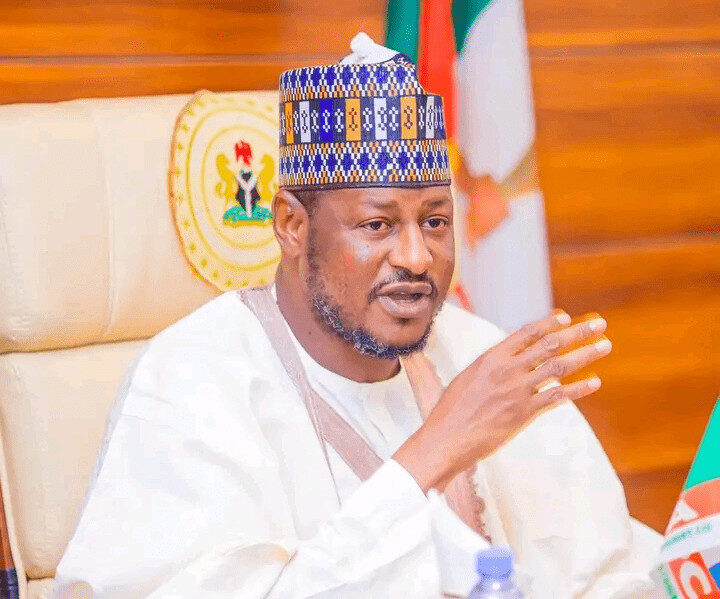
Governor Radda of Katsina State
From Mu’awuya Bala Idris Katsina
The Katsina State Government has intensified its efforts to block leakages and enhance transparency in public finance through a comprehensive training on Revenue Management and Digital Payment Systems. The training, organised by the Office of the Technical Adviser on Treasury Single Account (TSA), brought together revenue officers, financial controllers, and cashiers from various ministries, departments, and agencies across the state.
Read Also: Katsina Government Commends Mercy Corps for Strengthening Peace in Rural Communities
Speaking during the opening session, the Technical Adviser on TSA Implementation, Dr. Salisu Ladan, said the initiative aligns with Governor Dikko Umaru Radda’s commitment to accountability, transparency, and modern public finance reforms. He emphasized that the training is part of a strategic plan to strengthen revenue processes and ensure seamless adoption of digital payment systems under the TSA policy. Dr. Ladan explained that the TSA officially commenced in Katsina in January 2024, following the governor’s establishment of a roadmap committee in 2023. After serving as the committee’s secretary, he was appointed as the state’s first Technical Adviser on TSA implementation in 2025.
He noted that the TSA rollout is being implemented in phases, beginning with ministries and departments, while the current stage focuses on self-sustaining institutions such as tertiary schools, hospitals, and the Katsina State Transport Authority (KSTA). Dr. Ladan highlighted the importance of allowing such agencies timely access to funds for operations, explaining that a tailored digital system is being deployed to support their activities without violating TSA guidelines. He added that the training consists of three stages, TSA policy orientation, advanced technical sessions, and system monitoring using government financial platforms and payment gateways.
Dr. Ladan further revealed that self-sustaining agencies generated over ₦3 billion between September and November 2025, much of which had never been captured in the state’s financial records. He stressed that proper documentation of Internally Generated Revenue (IGR) boosts federal allocation, as federal funding formulas rely partly on transparent revenue reporting. He expressed confidence that by January 2026 all financial processes including payments, budgeting, and cash flow tracking—will be fully automated for improved efficiency.
Also Read: Hajj 2026: Kano State Pilgrims Welfare Board Sets New Deadline for Final Payment Collection
Speaking on the significance of the reform, the State Accountant General, Nura Talla, reaffirmed that integrating self-funding agencies into the TSA will greatly enhance accountability and eliminate manual loopholes previously exploited in revenue handling. He maintained that the move will ensure accurate financial reporting, strengthen cash control, and prevent agencies from operating unauthorized parallel accounts. According to him, the objective of the reform is not to restrict any agency but to guarantee that every public fund is properly recorded while allowing institutions to operate effectively.
