

“A CI DADI LAFIYA”: “Enjoy It in Good Health”
By Bello Muhammad Sharada
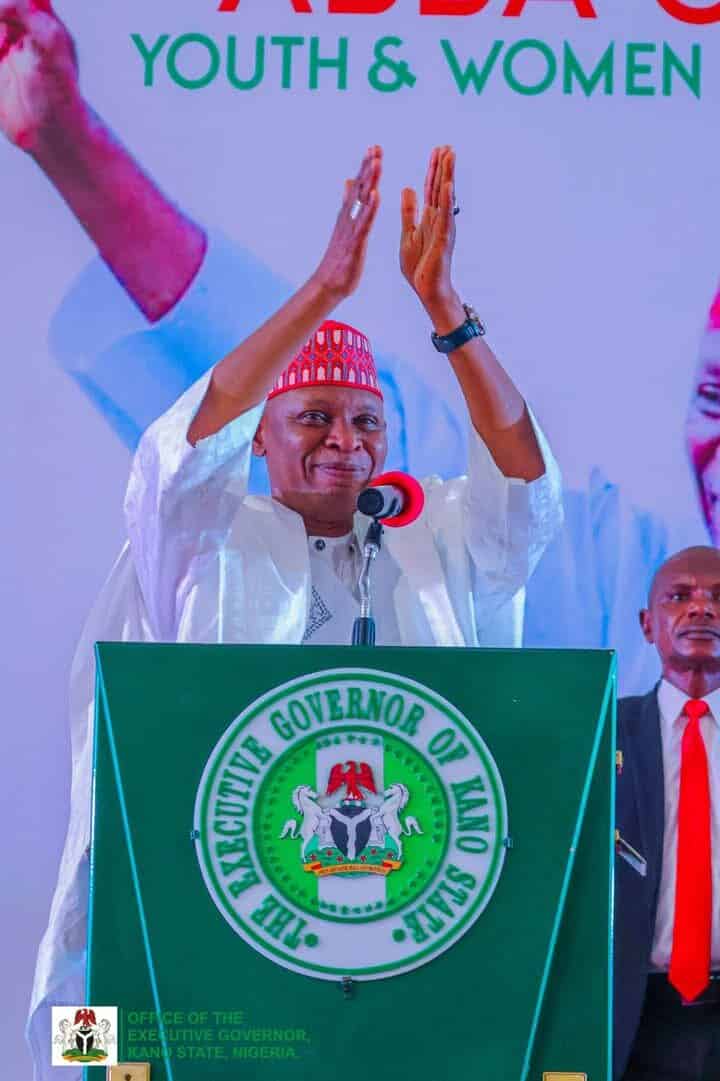
Ten major developments are likely to unfold if Governor Abba Kabir Yusuf switches allegiance from his party, the NNPP, to the APC. At the same time, the public would demand answers to several pressing questions already circulating amid this unfolding Kano political drama. I chose this title because the phrase “A Ci Dadi Lafiya” has become increasingly common in contemporary Kano politics.
1. Governor Abba would likely join the APC without the leader of the Kwankwasiyya Movement, Engineer Rabiu Musa Kwankwaso. RMK has previously stated that anyone who defects will hear nothing from him except the phrase: “A Ci Dadi Lafiya.”
2. Abba would almost certainly experience a serious fallout with his deputy, Comrade Aminu Abdusalam. The deputy might resign, as Professor Hafizu Abubakar once did, or face impeachment if he resists, similar to what happened to the late Alhaji Garba Gadi in Bauchi State.
3. The governor would likely move with nearly everyone in his government—elected members of the National and State Assemblies, local government chairmen and councillors, and even party executives—except for a few loyalists who would remain with Kwankwaso. This scenario would mirror the 1981–82 fallout between Rimi and Aminu Kano, or the 2016–17 split between Kwankwaso and Ganduje.
4. Upon entering the APC, Governor Abba would face the complex task of redefining his political relationships with multiple power blocs: former governor Ganduje and his supporters; the camp of Senator Barau I. Jibrin and his followers; the Abuja-based group including Kawu Sumaila, Alasan Rurum, Alasan Doguwa, and Abdulmumini Kofa; as well as the faction led by Murtala Sule Garo, Gawuna, and Abba Bichi.
5. By joining the APC, Governor Abba would also have to make a decisive choice regarding the Kano Emirate—whether to recognize and support Khalifa Muhammadu Sanusi II or the former Emir of Kano, Aminu Ado Bayero. One option must be chosen.
6. If Abba joins the APC without Kwankwaso’s backing, the Kwankwasiyya leader would be compelled to devise a survival strategy: sustaining the NNPP (the “book-bearing” NNPP), moving to the PDP, or joining a new coalition such as the ADC. In politics, survival ultimately depends on contesting elections.
7. Abba’s defection would divide—or possibly dismantle—the Kwankwasiyya political structure. It could give rise to rival factions similar to the “Kurdawa and Palasdinawa” divisions of the SDP era, or the “Santsi and Tabo” factions during the PRP era. Such a move would likely provoke intense political hostility, fierce rivalry, and heightened conflict across radio platforms and new media.
8. There would either be uneasy coexistence or open struggle between long-standing APC members and the new entrants. Harmony in governance and politics would be minimal. Fundamentally, Abba’s followers are primarily focused on protecting his governorship seat, not necessarily on supporting Bola Ahmed Tinubu. Conversely, Ganduje’s camp seeks full control of Kano rather than a secondary role. In short, it would be extremely difficult to meet Tinubu’s electoral expectations in Kano ahead of the 2027 elections.
9. Governor Abba and the people of Kano would demand clarity on several issues: the demolition of markets and plots, allegations of corruption against the Ganduje administration, and the loud claims about who truly loves Kano and who its supposed enemies are. The public would also want to understand any agreements reached between the federal and state governments that could affect ordinary citizens and the overall peace of the state.
10. The final and most critical question is whether these political maneuvers genuinely serve the public interest, or whether they merely advance the personal ambitions of a few individuals while ordinary citizens are left confused, misled, and taken for granted.
