

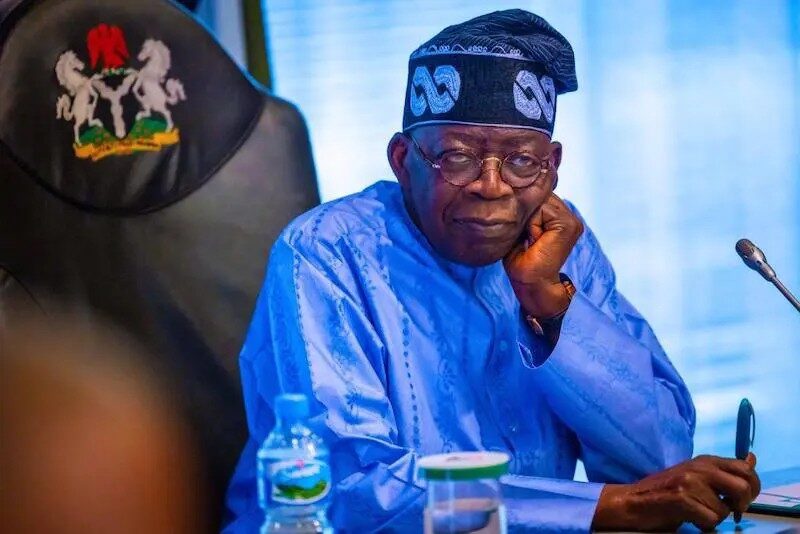
The Crippling Grip of Economic Instability: Can President Tinubu’s Renewed Hope Agenda Rescue Nigeria? (2)
By Abbati Bako,psc,bsis,UK’s Lone European University
abbatibako@gmail.com and+2349077889959
In the intricate dance of global economies, Nigeria’s financial stability hangs precariously in the balance. The nation’s economic woes are a stark reminder that a thriving economy is the lifeblood of human prosperity. Hence, economy is the number one fundamental principle of human life. Without economic stability in a nation there will never be peace, security and security of want in that nation. Economy is the heartbeat of human existence, pulsating with every decision, policy, and action. It’s the foundation upon which societies are built, and Nigeria’s economic interplay is damaged, with far-reaching consequences:
Poverty and Inequality:
Widening income disparities and poverty rates. Research indicates that 95% of Nigerians have #500,000.00 or less in their accounts. While the remaining 5% have millions or even billions of Naira in their accounts. The disparity is too wide and one day Nigeria’s democracy will face serious challenges due to poverty and economic precarity.
Read Also: PRESIDENT BOLA TINUBU: TRANSFORMATIONAL EFFORTS DESPITE CRITICISM AND OPPOSITION NOISE.
Also, in 2007 research conducted in Britain on Nigeria’s economic inequality indicates that 80% of the country’s wealth belongs to only 1% of the country’s population while the remaining 20% of the country’s wealth belonged to 99% of the remaining population. Therefore, poverty and economic inequality in the country must be corrected ASAP (as soon as possible) with a view to maintain the democratic system going on in the country.
This writing is on the page with Professor Paul Collier of Oxford University, London, in his book title “Wars, Guns and Votes: Democracy in Dangerous Places 2008, who says that “if democracy makes poor societies more dangerous, but societies that are not poor safer there must be some threshold level of income at which there is no net effect. The threshold is around $2700 per capita per year, or around $7 per person per day. The societies of the bottom billion are all below this threshold: most of them are a long way below it”. Then one may ask: a local labourer in Nigeria or in most of African countries can earn $7 (#10,000) per day?
Unemployment:
A burgeoning youth population (about 65% under the age of 30) are youths without future prospects in life. President Bola Tinubu’s government must emphasize on Foreign Direct Investment (FDI) to minimize the unemployment rate in Nigeria. Research indicates by the UN that by the year 2050 Nigeria’s population will reach around 450m. And again, the population will enlarge to 800m before the end of this century and number 3 most populous nations after India and China.
And Africa with the current population of 1.4b (17% of the current global population) will enlarge to 40% of the global population but with 80% of the global poverty according to the United Nation’s projection. Although Africa has 33% of the global resources, poor and substandard leadership will never allow the Continent to develop like other global Continents. Africa is the poorest region with more than $600B debts and Nigeria’s debts have been 8.4% out of the amount. Africa’s economic strength is too meager to count on, considering the total amount of global wealth and assets of $1.54 quadrillion.
Also Read: The Crisis of Work Ethic and the Rise of Functional Irrelevance in Northern Nigeria
Stunted Growth:
Sluggish economic expansion and limited opportunities in the country especially among the youths. President Tinubu’s Renewed Hope Agenda offers a glimmer of hope if Nigeria’s majority of population understand that majority of the global countries followed the same 10 prescription of World Bank/IMF as did by China, India, Saudi Arabia, South Africa, Brazil, Mexico, Egypt and other countries of the Global Southern Hemisphere. Hence, there’s no other way at the global moment as “Globalization Policy” is still on going like a bandwagon based on “democratization, global economic integration and multiculturalism.
Economic Diversification:
Reducing dependence on oil and fostering competitive industries, hence there is need for concrete electricity energy that is not less than 40,000 to 60,000 MGW in Nigeria with a population of about 230m. S/Africa with a 60m population have 40,000 MGW, S/Arabia with a 39,000m population have 60,000 and Brazil with 114,000 MGW even in the past 20 years.
Infrastructure Development:
Power, transportation, and science, technology and innovation upgrades.
Human Capital Investment:
Education and healthcare reforms
Good Governance:
Transparency and accountability
But can this agenda solve Nigeria’s economic quagmire? The challenges are daunting.
5. Corruption:
Mismanagement and embezzlement of resources must be tackled ASAP.
6. Weak Institutions:
Lack of robust regulatory frameworks
Global Economic Headwinds.
Currency fluctuations and trade tensions should be stabilized.
Nigeria’s economic future hangs in the balance. Will President Tinubu’s Renewed Hope Agenda be the catalyst for change, or will the status quo prevail? The clock is ticking and time will tell.
Some possible points to consider:
Implementation and Accountability.
Effective execution and monitoring of the agenda especially if the agenda has been serialized based on calendar time-frame.
Stakeholder Engagement:
Involving citizens, businesses, and civil society organizations in economic decision-making.
Contextualizing Solutions:
Adapting global best practices to Nigeria’s unique challenges.
Abbati Bako, political strategy and communications consultant, IPRC Nigeria
