

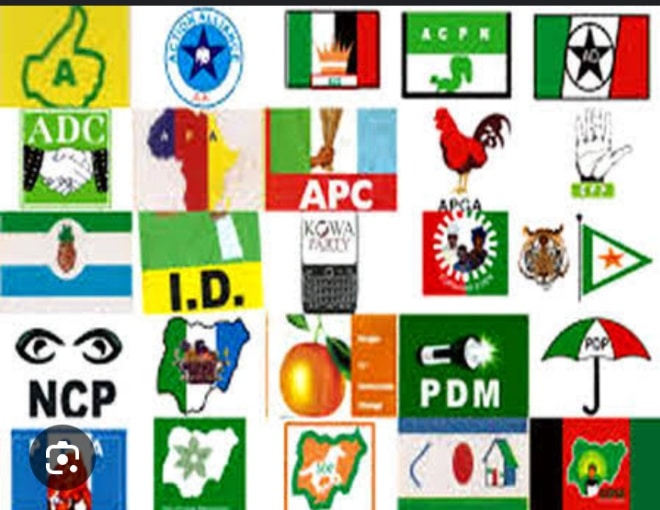
The Nigerian Chase Game: Unpacking the Complexities of Political Parties in the 2027 Elections
By Abbati Bako,political strategist and communications consultant
As Nigeria prepares for the 2027 elections, its democratic system finds itself at a critical juncture or we can say cross road. The country’s inability to reap the full benefits of democracy is a phenomenon shared by many African nations. The root cause of this issue lies in the failure to adhere to the fundamental principles and rules that underpin democratic governance. Meaning that, failure to follow the key elements and principles of the system in the past 26 years has been what led to the inability of the majority of Nigerians to get the benefits of the system.
Read Also: Donald Trump Change of Name in Pentagon From Depends to War
Many countries in Africa such as South Africa, Rwanda, Ethiopia, Namibia, Ghana, Senegal, Tanzania are all getting positive benefits of the system. Likewise in other parts of the Global Southern Hemisphere such as Singapore, Malaysia, Japan, Indonesia, South Korea, Mexico, Brazil and India; the global largest democracy with about 25,000 political parties and over 900M voters are still getting positive benefits of the political democratic system, especially economic growth and development.
A Leadership Vacuum in Africa’s Largest Economy:
As Africa’s largest economy and most populous nation, Nigeria’s struggles with democracy have far-reaching implications for not only Nigeria but the entire African Continent. The country’s democratic system has been marred and truncated to develop by inconsistencies in policy making, undermining the very foundations of governance. This has resulted in corruption, poverty, lack of accountability, insecurity and security of want, lack of patriotism in the system, transparency, neglect to control stagflation and failure to get vibrant and effective leadership that will make the country have vibrant economic interplay, growth and development. For the past 26 years Nigeria’s democracy is still limping compared with other economic emerging nations in Africa and other global Southern Hemisphere. No democratic system in the world can be developed without building institutions. Government institutions of the country are key to developing a nation. China, India, South Korea, Singapore are an excellent example among global economic emerging markets in the world. These countries mentioned are nonentity in terms of economic activities, growth and development in the last 45 years. And in the next 25 years they will be on top of the best economies in the world, especially China and India. They may be leading the world in political, economic and social issues. However, Professor George Friedman argued that “China will not be the global largest economy due to over population, geopolitical location of the country, building infrastructure, financing education and healthcare demands”, (His Book “The Next 100 Years, 2009”).
The Chase Game Analogy:
The Nigerian political landscape can be likened to a game of chase, where political parties such as APC, PDP, ADC NNPP, UPGA engage in a relentless pursuit of power and influence and undermining each other. In this game, the cheese represents the coveted prize of political dominance. However, the pursuit of this prize often comes at the expense of democratic principles and the positive welfare of the Nigerian people. The essence and intention of political democracy is to deliver the dividend of the system to the electorates. The work of the citizen in democratic system is to vote for whoever will represent him in the corridor of power. And the work of those who will represent him is to do what the citizens want, pure and simple. Hence, Abraham Lincoln once popularized the saying that “democracy is a game of the people, for the people and by the people”. That is democracy for you.
The 2027 Elections: A Watershed Moment?
The upcoming 2027 elections present a critical opportunity for Nigeria to reevaluate its democratic trajectory. Will the country’s political parties prioritize the interests of the people, or will they continue to engage in the cheese game, pursuing power and influence at any cost? The outcome of these elections will have far-reaching implications for Nigeria’s future and the stability of its democratic system in the country. Sheikh Hasina of Bangladesh is an excellent example to learn.
Conclusively:
Conclusion, Nigeria’s democratic system is at a crossroads. The 2027 elections offer a chance for the country to redefine its democratic path and prioritize the welfare of its citizens. As Nigeria navigates this critical juncture, it is essential to recognize the importance of adhering to democratic principles and rejecting the destructive pursuit of power and influence that has characterized the country’s political landscape. The INEC must make sure to conduct free, fair, credible, violence free and acceptable elections in accordance with international standards. Remember that, academic research indicates that among the top 100 countries practicing democracy in the world, Nigeria has been backward in the position of number 98. Therefore, both internal and external stakeholders in Nigeria’s democratic system must wake up to ensure that the 57 key elements and principles of the system are adhered to in the political system. Otherwise, the system may collapse soonest. Anything that cannot be practiced in accordance with the rules and principles of the game will be a complete failure. May God bless my beloved country, Nigeria.
Dr. Abbati Bako, abbatibako@gmail.com
+2349077889959
