

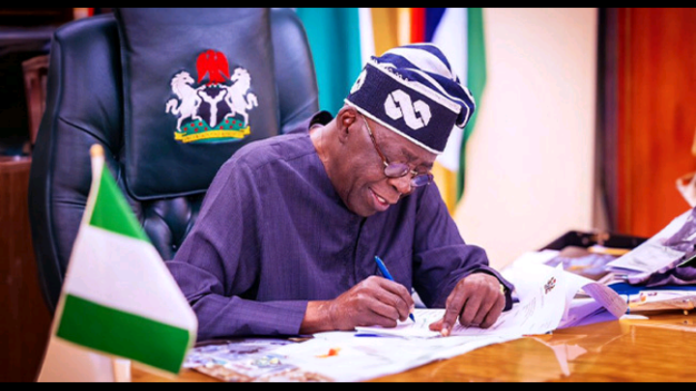
For the Attention of President Bola Tinubu: How The World is Rapidly Changing, Politically and Economically
By Abbati Bako,psc,bsis,Kent,UK
The Future World of Science, Technology, and Innovation Without Borders is becoming unpredictable for the future generations in Nigeria and the Global Southern Hemisphere. So, Nigeria and African countries are at the crossroads.
As we embark on this journey to explore the future of science, technology, and innovation, it’s essential to take a step back and delve into the rich history that has shaped our world. The 18th to 20th centuries marked the inception of the science and technology era, which gained momentum post-World War I and II, catapulting the world into unprecedented economic growth and development. The capital and assets have reached about trillion of dollars. Nigeria’s population will reach around 450m by 2050 and 800m before the end of this century and number three most populous countries after India, China, Nigeria and then America follows.
A world transformed fast-forward to today, and we’re faced with a global population of approximately 8.3 billion people, with science, technology, and innovation permeating every aspect of our lives. The world has become increasingly monetized, with everything revolving around money, especially in developing countries. The African population will be 40% of the global population according to the United Nations assessment but 80% of the population will be in extreme poverty because of unproductivity due to stagflation, security challenges, security of want and environmental degradation.
*Global economic interplay:
The total amount of the global economy in dollars is a complex figure to pin down, as it encompasses various forms of money, investments, and assets. However, we can break it down into different categories to get an idea of the scale. Although the world respected economist Professor Robert Gilpin claims that “Sub- Saharan African countries have less than 1% of global trade” 2000,USA but recent research indicates that African countries’ economic interplay is growing up to more than 3% out of global economic interplay and Sub-Saharan countries are doing well.
*Global Money Supply:
The total amount of physical currency in circulation worldwide is approximately $8.28 trillion. This figure includes all the notes and coins in circulation across 20 major countries, plus the euro area and pounds sterling.
*Global Money Supply:
When we include demand deposits, travelers’ checks, and other liquid assets, the global money supply jumps to around $48.9 trillion.
*M2 Money Supply:
Adding in savings deposits, mutual funds, and other time deposits, the global M2 money supply reaches approximately $82.6 trillion.
*Global Market Capitalization:
The total value of all publicly traded securities across the world’s major stock exchanges is around $110.2 trillion. Adding in the total market capitalization of cryptocurrencies, we get an additional of about $2.5 trillion. But Africa is still lagging far behind in global economic interplay.
*Global Wealth:
The total value of global wealth, including real estate, investments, and other assets, is estimated to be over $1.54 quadrillion. This figure includes the value of all assets, not just liquid cash.
Keep in mind that these figures are estimates and may vary depending on the source and methodology of research used. Nonetheless, they give us an idea of the sheer scale of the global economy. Hence, the essence of this writing is to alert the Nigerian leadership on how the world political economic interplay moves and changes rapidly.
*The Rise of Technological Giants:
There was rioting yesterday in some of the US States, UK and other European countries against Tesla Company. Even Elon Musk claims that since he “joined government service” his 500 companies are getting down. The influence of technological giants, such as the Elon Musk, and the commercialisation of world politics and economic interplay, as exemplified by Donald Trump’s presidency, have further complicated the landscape of the future of Africa and global South. The intersection of technology, politics, and economics has given rise to new challenges and opportunities and even lack of opportunities necessitating a nuanced understanding of this complex ecosystem that only leaders with focus and sterilized strategic planning based on calendar time frame can succeed especially in the global Southern Hemisphere.
*Navigating the Future:
As we navigate this intricate web, it’s crucial to consider the implications of emerging technologies, such as artificial intelligence, blockchain, and the Internet of Things (IoT). These technologies have the potential to revolutionize industries, transform societies, and reshape the global economy. Hence, African leaders must be aware of the current global changes which may vigorously take shape by the year 2030.
*Collaboration and Regulation:
However, to harness the benefits of these technologies, we must prioritize collaboration and regulation. The need for standardized protocols, common standards, and norms has never been more pressing. International organizations, governments, and private entities must work together to establish frameworks that promote innovation while ensuring accountability and responsibility. As Professor Paul Collier of Oxford University London opined that African leaders should prioritize “accountability” 2009,UK.
Embracing a Borderless Future. The future of science, technology, and innovation is inherently borderless. As we move forward, it’s essential to recognize the interconnectedness of our world and the need for collective action. By embracing this borderless future, we can unlock the full potential of science, technology, and innovation, driving growth, prosperity, and progress for all.
The Evolving Nature of Democracy
As Emeritus Professor John Groom astutely observed, the current global democratic system is poised for significant change. The rise of multinational corporations and organizations will likely transform the democratic landscape, rendering traditional political parties obsolete. The European Union’s borderless structure serves as a compelling example of this shift.
*A New Era of Commercialized Democracy?
The current US administration, led by President Donald Trump, appears to be ushering in an era where commercialization and democratization converge. With influential figures like Elon Musk, Vance and Peter Thiel at the helm, it seems that the democratic system is indeed undergoing a profound transformation, one that will continue to evolve in the years to come. Hence, Mr. President Bola Ahmed Tinubu got alerted.
To be continued insha’Allah
I enjoy research. Research is knowledge and knowledge is research.
Abbati Bako,political strategy and communications consultant IPRC, Nigeria and Treasurer Kano Chamber of Commerce can be reached at abbatibako@gmail. com
